General
How to Learn Quran Tajweed from Scratch: A Complete Guide for Beginners
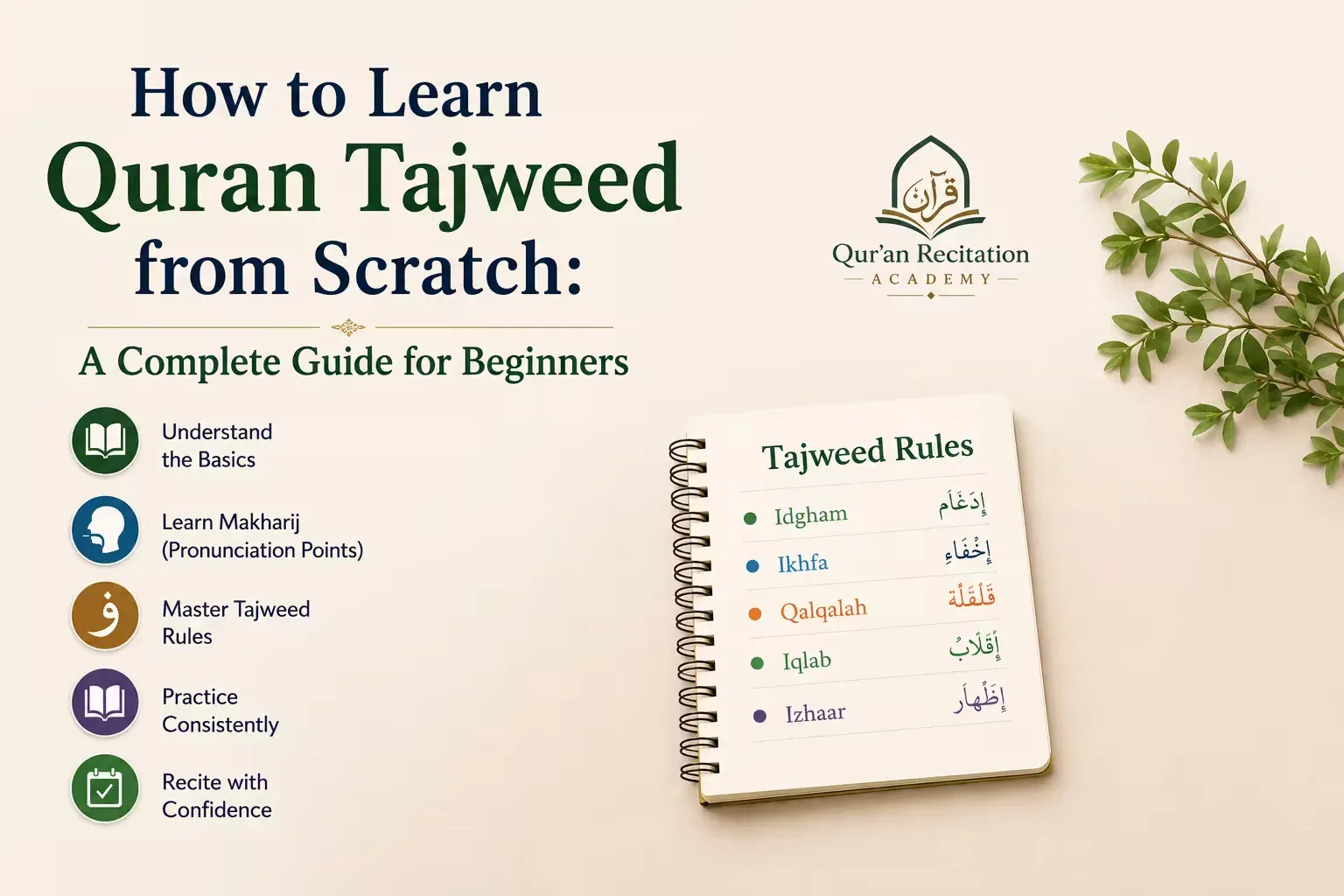
Do you want to learn the Quran the right way but don't know where to start? If you're a beginner looking to master Quran tajweed, you're in exactly the right place. Tajweed might seem complicated at first glance, but this comprehensive guide will walk you through everything you need to know to begin your journey.
Tajweed (تجويد) is the specialized science of pronouncing Quranic letters correctly from their precise articulation points and giving each letter its due rights and characteristics. The good news is that learning Quran tajweed from scratch is absolutely possible, even if you're not a native Arabic speaker.
Why Should You Learn Quran Tajweed?
Before diving into how to learn tajweed, it's crucial to understand why. Tajweed isn't just about improving your voice—it's a religious obligation.
The Prophet Muhammad (peace be upon him) said: "The one who recites the Quran skillfully, with the noble and obedient angels, and whoever recites it, stammering over it with difficulty, will have a double reward" (Sahih Al-Bukhari and Muslim). This indicates that mastering the Quran and reciting it correctly is something highly valued.
From a practical perspective, tajweed rules prevent critical meaning errors. A single word mispronounced can completely change the meaning of an entire verse. For example:
- Qalb (قَلْب) = Heart
- Kalb (كَلْب) = Dog
The difference in pronunciation is subtle, but it creates a massive difference in meaning.
Step One: Learn the Arabic Alphabet
If you truly want to learn Quran tajweed from scratch, you must begin with the foundation: the Arabic letters.
You need to learn:
1. The 28 Arabic Letters
The Arabic alphabet begins with Alif and ends with Ya (ا ب ت ث ج ح خ د ذ ر ز س ش ص ض ط ظ ع غ ف ق ك ل م ن ه و ي).
2. The Basic Vowel Marks (Harakat)
Each letter can take different vowel marks:
- Fathah (َ) - Opens the mouth slightly
- Kasrah (ِ) - Moves the tongue downward
- Dammah (ُ) - Rounds the mouth
- Sukun (ْ) - No vowel sound added
3. Shaddah and Tanween
- Shaddah (ّ) - Makes the letter stronger
- Tanween (ً ٌ ٍ) - Doubles the letter with a light nasal sound
Step Two: Master the Rules of Noon Sakinah and Tanween
Now we come to the truly important part of learning Quran tajweed. The rules of noon sakinah and tanween are among the most important rules you'll use daily when reciting the Quran.
There are five main rules for noon sakinah and tanween:
1. Izhar (الإظهار) - Clear Pronunciation
Meaning of Izhar: Pronouncing noon clearly and fully without blending or hiding.
When it occurs: When noon sakinah or tanween comes before one of the six throat letters (ء ه ع ح غ خ).
Example: "An'amta" (Surah Al-Fatihah 1:7) - The noon is very clear before the ayn.
2. Idgham (الإدغام) - Blending
Meaning of Idgham: Blending the noon sound with the following letter so they become one letter with a shaddah.
Idgham is divided into two types:
A) Idgham with Ghunnah
When noon comes before (ي، ن، م، و، ل، ر) - remembered as "Yarmalon"
In this case, we blend the noon with the letter while keeping the ghunnah (nasal sound).
Example: "Min ya'mal" (Surah An-Nisa 4:123) - You can hear the nasal sound when blending noon with ya.
B) Idgham without Ghunnah
When noon comes before (ل، ر) - the blending happens without any nasal sound.
Example: "Min rabbihim" (Surah Al-Baqarah 2:5) - The noon completely blends with the raa with no remaining nasal sound.
3. Iqlab (الإقلاب) - Transformation
Meaning of Iqlab: Converting noon to a meem sound when it comes before ba.
Example: "Min ba'd" (Surah Al-Baqarah 2:27) - Pronounced as "Mim ba'd" - the noon becomes meem.
4. Ikhfa (الإخفاء) - Concealment
Meaning of Ikhfa: Hiding noon between full pronunciation and blending—you pronounce it softly without full clarity.
Ikhfa occurs before 15 letters of the Arabic alphabet (ت ث ج د ذ ز س ش ص ض ط ظ ف ق ك).
5. Complete Noon Sakinah Rules Summary
These five rules cover all instances where noon sakinah appears in the Quran. Mastering them will immediately improve your recitation quality.
Step Three: Learn Meem Sakinah Rules
After mastering noon rules, we learn meem sakinah rules. These are slightly easier because there are only three rules:
1. Idgham Shafawi (Labial Blending)
When meem sakinah comes before another meem, they blend with a shaddah and ghunnah.
Example: "Kuntum mu'mineen" (Surah Al-Baqarah 2:91)
2. Ikhfa Shafawi (Labial Concealment)
When meem sakinah comes before ba, it's concealed with a soft sound.
Example: "Tarmiihim bi hijara" (Surah Al-Fil 105:4)
3. Izhar Shafawi (Labial Clarity)
In all other cases, pronounce meem clearly.
Step Four: Understand Madd Rules (Vowel Prolongation)
Madd means prolonging a vowel sound. There are several types of madd in the Quran:
1. Madd Tabii (Natural Madd)
Prolonging the letter exactly two counts.
Example: "Qaloo" (Surah Al-Baqarah 2:11)
2. Madd Muttasil (Connected Madd)
When a madd letter (ا و ي) comes before hamza in the same word, prolong for 4-5 counts.
Example: "Jaa" (Surah An-Nasr 110:1)
3. Madd Munfasil (Separated Madd)
When the madd letter ends one word and hamza starts the next, prolong for 4-5 counts.
Example: "Qaloo aminaa" (Surah Al-Baqarah 2:14)
4. Madd Lazim (Necessary Madd)
When a madd letter comes before a permanent sukun or shaddah, always prolong for exactly six counts.
Example: "Ad-Dalin" (Surah Al-Fatihah 1:7) - This is recited in every prayer.
Step Five: Tafkhim and Tarqiq (Heavy and Light Letters)
Not all letters are pronounced the same way. Some letters are heavy (tafkhim) and others are light (tarqiq).
Always Heavy Letters:
خ، ص، ض، ط، ظ، غ، ق (7 letters)
Example: "Ad-Dalin" - All these letters are pronounced with heaviness.
Always Light Letters:
All other letters except raa and lam in the word "Allah".
Ra: A Special Case
Ra changes based on its vowel:
- Heavy when it has fathah or dammah: "Rabb"
- Light when it has kasrah: "Rijal"
Step Six: Qalqalah (The Echoing Sound)
Qalqalah is an echoing, bouncing sound that occurs with five specific letters (ق، ط، ب، ج، د) when they carry sukun.
Example: "Yaqta'oon" (Surah Al-Baqarah 2:27) - You feel the echoing vibration.
Qalqalah becomes stronger:
- At the end of a word when stopping = Stronger qalqalah
- In the middle of a word = Weaker qalqalah
Step Seven: Common Mistakes to Avoid
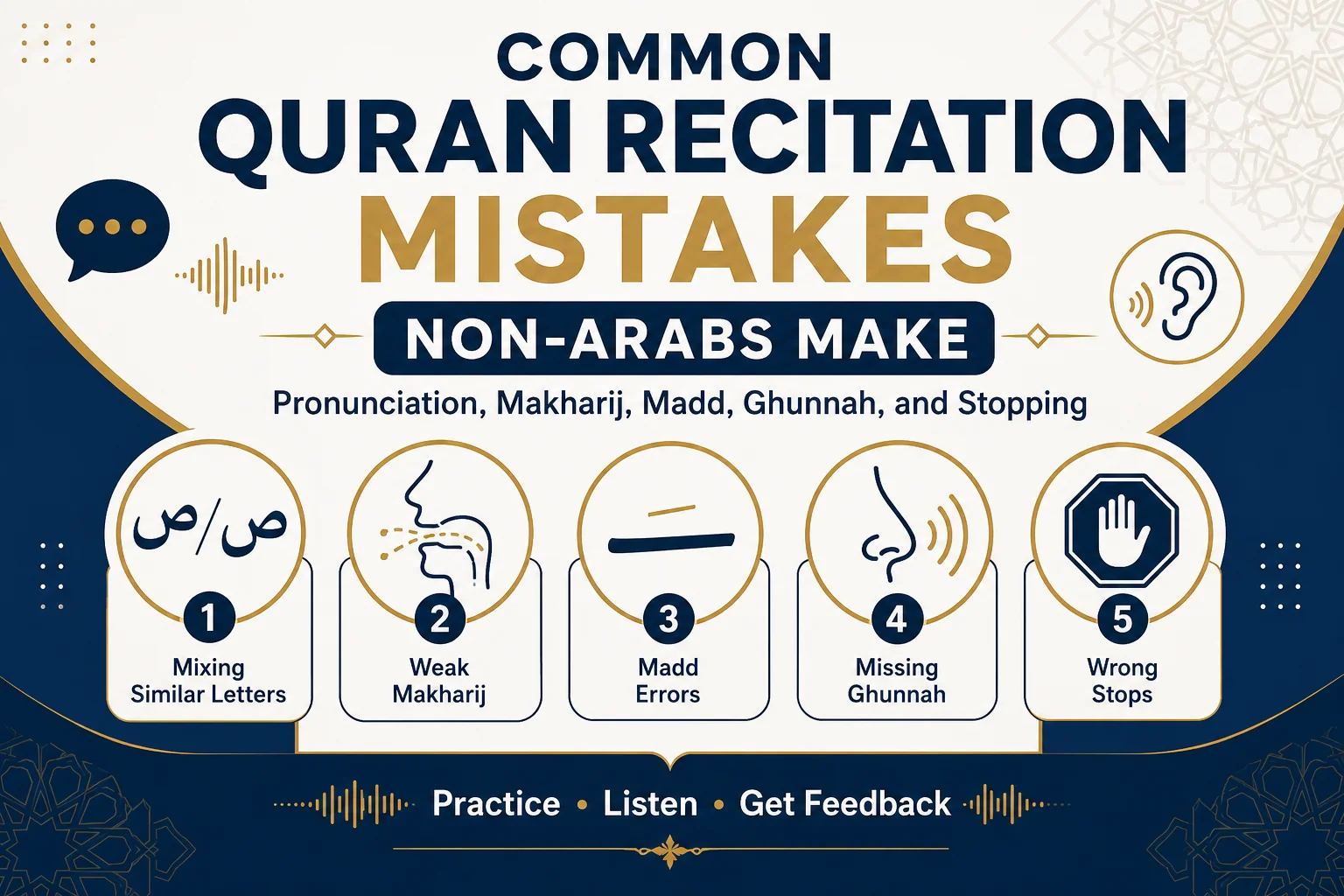
When learning Quran tajweed from scratch, it's natural to make mistakes. Here are the most common ones:
1. Not Distinguishing Between Similar Letters
Like the difference between ح and ه (both from the throat but completely different).
2. Ignoring Ghunnah
Ghunnah must be present in specific places only, not everywhere.
3. Incorrect Madd Prolongation
Some people prolong madd too much, which distorts the recitation.
4. Excessive Speed
Speed loses accuracy. Tajweed requires time and patience.
5. Poor Listening Skills
Don't rely on reading alone. Listen consistently to a skilled reciter (like Al-Husary or Al-Minshawi).
How to Start Practical Learning
Now that you know the basics, here are the practical steps:
1. Start with Surah Al-Fatihah
Surah Al-Fatihah contains most tajweed rules and is recited in every prayer. Learning it correctly builds a strong foundation.
2. Choose a Qualified Teacher
Learning with a specialized teacher dramatically speeds up progress. The teacher hears your mistakes and corrects them immediately.
Online Quran tajweed courses provide certified teachers who can help you personally.
3. Practice Reading Daily
Even 15 minutes daily is better than one hour per week. Repetition is the key to mastery.
4. Record Yourself
Listen to yourself and compare with a skilled reciter. This helps you correct your own mistakes.
5. Be Patient
Most people master the basic rules in 3-6 months, but natural application takes one to two years.
Available Learning Options
If you want to accelerate your learning, there are several paths:
1. Individual Online Classes
The best way for rapid progress and immediate corrections.
2. Noorani Qaida Course
If you're completely new to reading, start with Noorani Qaida course first before tajweed.
3. Video Tutorials
There are many helpful videos on YouTube, but it's better to combine them with a personal teacher.
Conclusion and Final Tips
Learning Quran tajweed from scratch isn't as complicated as it might seem at first. All you need is:
- ✅ Patience and determination
- ✅ Consistent daily practice
- ✅ A trusted teacher to guide you
- ✅ Careful listening and comparison
- ✅ Gradual understanding of the rules
Remember that the Prophet Muhammad (peace be upon him) said: "The one who recites the Quran skillfully, with the noble and obedient angels, and whoever recites it, stammering over it with difficulty, will have a double reward" (Sahih Al-Bukhari and Muslim). This means proficiency is required, and Allah will reward you for your effort.
Start Your Journey Today
Don't delay! There are specialized teachers in certified academies waiting to teach you. Try basic Quran lessons or start directly with advanced tajweed courses.
Begin today. Invest in the most noble speech of Allah.
Additional References for Deeper Learning
- For more detailed tajweed rules: Complete Tajweed Rules from Rahiq Academy
- For direct tajweed lessons: Live Quran Tajweed Classes
Frequently Asked Questions
Q: Can you learn tajweed without a teacher?
A: You can understand the rules from books and videos, but a specialized teacher speeds up progress and prevents repeated mistakes.
Q: How long does it take to learn tajweed?
A: Basic rules take 3-6 months. Complete mastery may take a year or more.
Q: I'm a non-native Arabic speaker. Can I learn tajweed?
A: Absolutely! Thousands of non-native speakers have successfully learned tajweed.
Q: What's the difference between tajweed and tarteel?
A: Tajweed is the rules. Tarteel is applying tajweed at a slow, measured pace.
Share this article
Start Your Quran Journey Today
Book 2 FREE trial lessons with a certified teacher — no credit card required.
Book 2 FREE Trial Lessons