Quran Learning
Online Quran Classes for Adults: 7 Steps to Start
Many adults want to learn Quran but feel embarrassed about starting late, reading slowly, or making mistakes. This guide explains how adult beginners can start Quran classes with the right teacher, level, and pace.
Online Quran Classes for Adults: 7 Steps to Start
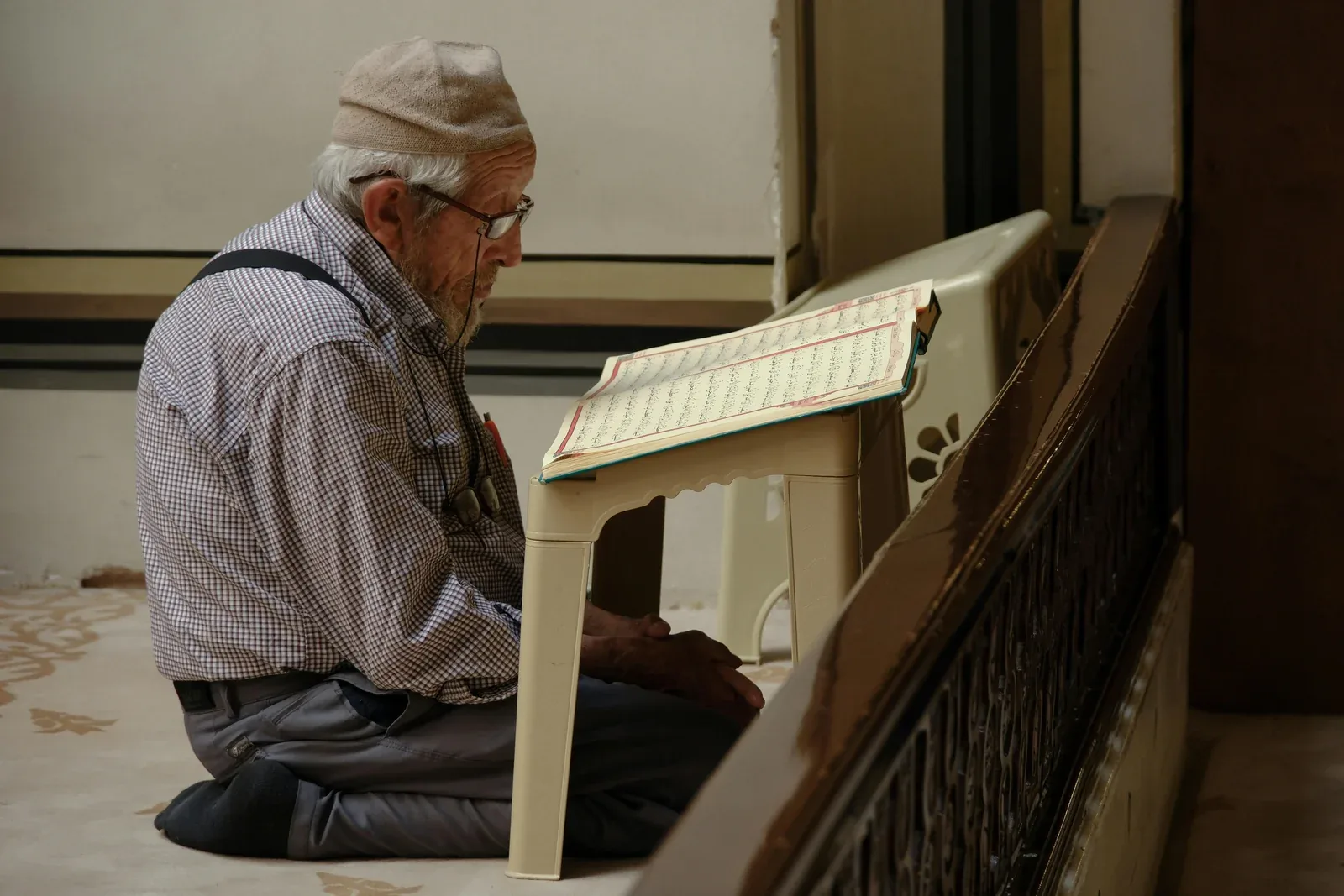
“What if the teacher asks me to read and I cannot even recognize the letters?” Many people search for online Quran classes for adults because this fear is already in their mind before the first lesson.

Some adults learned a little as children and forgot. Some can read Arabic words but pause often. Some cannot read the letters yet. Some feel embarrassed because their children may already read better than they do.
That feeling is real. But it should not decide your next step.
A good Quran class for adults should begin with your actual level. The teacher should listen, correct with patience, and help you build Quran reading, Tajweed correction, Arabic understanding, and a routine you can keep.
Why Adults Feel Embarrassed About Quran Classes
Adult embarrassment often comes from comparison.
You may compare yourself with children who started early. You may compare yourself with relatives who read fluently. You may compare your current level with where you think you should be.
That comparison can make the first lesson feel heavier than it is.
You may worry about simple but sensitive things:
- mispronouncing Arabic letters
- reading too slowly
- forgetting rules you learned years ago
- not knowing where to start
- being corrected in front of others
- needing Noorani Qaida online before reading from the Mushaf
These are normal starting points.
A serious Quran teacher should not be shocked by them. Adult learners come with different histories. One student may need the Arabic alphabet. Another may need reading practice. Another may read well enough but need Tajweed correction.
Is It Too Late to Start Learning Quran?
No. It is not too late to begin.
Learning the Quran is not limited to childhood. A child may have more free time. An adult may bring intention, focus, questions, and responsibility.
The Prophet ﷺ said:
Arabic:
خَيْرُكُمْ مَنْ تَعَلَّمَ الْقُرْآنَ وَعَلَّمَهُ
English:
“The best among you are those who learn the Qur’an and teach it.”
Source: Sahih al-Bukhari, Hadith 5027.
This hadith encourages learning and teaching the Quran. It does not place an age limit on the learner.
Still, the adult path should be realistic. You may not fix years of weak reading in a few lessons. You may need to repeat letters many times. You may need slow correction before fluent recitation. That is not failure. That is part of learning.
7 Steps to Start Quran Classes as an Adult
1. Say Your Real Level Clearly
Do not hide your starting point.
Tell the teacher what is true. You may say, “I cannot read Arabic letters,” or “I can read, but I make many mistakes.” This helps the teacher choose the right lesson path.
2. Ask for a Level Check First
Do not choose a course only by its name.
A level check helps the teacher see whether you need letters, reading practice, Tajweed correction, or a later memorization plan. This step protects you from starting too high or too low.
3. Start Small Enough to Continue
Many adults begin with too much energy. Four classes a week. Long practice sessions. Several videos. Too many notes.
Then work gets busy, energy drops, and the plan stops.
Begin with a routine you can keep. A short review after class is often better than a large plan that collapses.
4. Accept Correction Without Shame
Correction is part of Quran learning.
If the teacher corrects a letter or vowel, that does not mean you are failing. It means the teacher is doing the work you came for.
5. Use a Notebook for Repeated Mistakes
Write down the sounds or words you keep missing.
For example, you may need to practice the difference between similar letters. You may also need to review long vowels, short vowels, or stopping at the end of an ayah.
6. Do Not Compare Yourself With Children
A child who started years before you has a different path.
Your path is yours. Compare this week’s reading with last week’s reading. That is more useful.
7. Choose a Teacher Who Understands Adults
Adults often need privacy, explanation, and steady correction. They may also need a teacher who understands work, family, and limited time.
If the teacher makes basic questions feel foolish, that is a problem. A Quran class should correct your reading without humiliating you.
What Should Adult Beginners Learn First?
The right starting point depends on your level. Many adults make a mistake here. They choose Tajweed, memorization, or recitation before anyone has listened to their reading.
A level check should come first.
If You Cannot Read Arabic Letters
Start with the Arabic alphabet, letter shapes, vowel marks, and basic pronunciation.
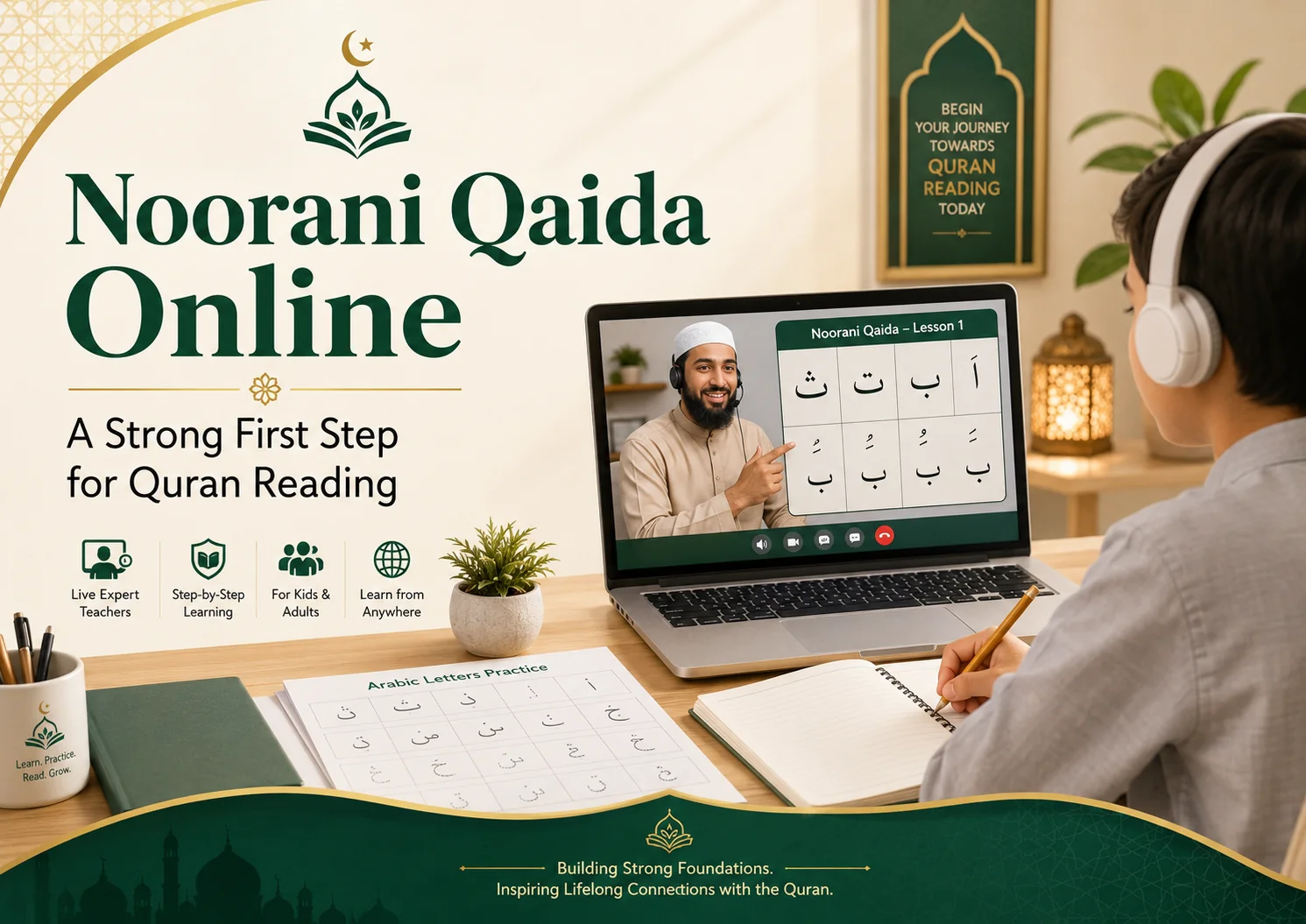
This is where Noorani Qaida online can help many adult beginners. Noorani Qaida is not only for children. Adults who cannot read Arabic may use it to build the foundation needed for Quran reading.
At this stage, your work may include:
- recognizing Arabic letters in different positions
- reading fatḥah, kasrah, and ḍammah
- joining letters into short words
- hearing the difference between similar sounds
- repeating difficult letters with teacher feedback
Do not rush this stage. Weak foundations make later Tajweed harder.
If You Can Read But Struggle with Fluency
You may know the letters but still stop at many words. You may read one line with effort. You may lose confidence when the words connect.
In this case, you need guided Quran reading practice.
The teacher may ask you to read slowly, correct one mistake at a time, and repeat short passages until your reading becomes steadier. This is not the same as memorization. The goal is to read clearly before moving into heavier rules.
If You Can Read But Need Tajweed Correction
Some adults can read the Arabic text but know their pronunciation needs work. They may confuse letters, shorten long vowels, stretch short vowels, or miss basic Tajweed rules.
At this level, you may need to learn Tajweed gradually.
Tajweed should not be treated as a quick extra added to recitation. It needs correction, training, listening, and repetition. A teacher should help you apply rules while reading, not only memorize rule names.
Private, Group, or Online Quran Classes?
Adults often ask whether they should choose private lessons, group classes, or online Quran classes for adults.
Each option can work. The right choice depends on your level, schedule, and comfort.
When Private Lessons May Help
Private lessons may suit you if embarrassment is your biggest barrier.
One-to-one lessons give you space to read slowly, ask basic questions, and receive direct correction. You do not need to worry about other students hearing every mistake.
Private lessons may also help if your level is uneven. You may know some letters but not others. You may recite short surahs from memory but struggle to read from the page.
When Group Classes May Work
Group classes can work for adults who are comfortable learning with others at a similar level.
They may help with motivation. You see other adults trying, making mistakes, and improving. That can make you feel less alone.
But if a group makes you avoid reading aloud, a private class may be the better first step.
Why Online Classes Can Fit Adult Schedules
Many adults delay learning because of work, family, travel, or limited local options.
Online Quran classes can make lessons easier to schedule. You can study from home, choose a suitable time, and work with a teacher who understands adult beginners.
Online learning is not always better than local learning. A good local teacher is a blessing. But for many adults, online lessons remove practical barriers and make consistency easier.
If you are a parent, you may also want a separate learning path for your child through online Quran classes for kids. Adult learning and children’s learning should not be treated as the same thing.
What a Respectful Quran Teacher Should Do
The teacher matters.
A respectful Quran teacher should not shame you for your level. They should not rush you into advanced Tajweed before you can read. They should not make basic questions feel foolish.
A good teacher should:
- check your level before choosing the lesson path
- listen to your reading carefully
- correct one issue at a time
- explain pronunciation in simple language
- give manageable practice after class
- repeat difficult sounds without irritation
- tell you whether you need letters, Noorani Qaida, reading fluency, or Tajweed correction
If you are a sister and prefer a female Quran teacher, ask whether that option is available. If you feel nervous reading to a teacher, mention it in the first class.
Common Mistakes Adults Should Avoid
Starting with Memorization Too Early
Memorization is a noble goal, but it may not be the first step for every learner.
If you cannot read well, begin with reading. If your pronunciation is weak, correct it gradually. Later, Quran memorization online may become more suitable.
Skipping Beginner Reading Because It Feels Too Basic
Some adults avoid beginner books because they feel embarrassed.
That can hold them back.
If you need letters, vowels, and joining practice, then a beginner path is not beneath you. It is the right tool for your level.
Trying to Master Tajweed Before Reading Steadily
Tajweed matters. But if you cannot read a word without stopping at every letter, heavy Tajweed theory may overwhelm you.
Build reading first. Add Tajweed step by step.
Changing Teachers Too Often
It is reasonable to change teachers if the method is poor or the teacher is harsh.
But changing too often can break your progress. Once you find a respectful teacher with a clear plan, give the method time.
Doing Too Much and Then Quitting
Adults often start with high energy. Then work becomes busy, energy drops, and the plan collapses.
Start with a schedule you can keep. The Prophet ﷺ said:
Arabic:
سَدِّدُوا وَقَارِبُوا، وَاعْلَمُوا أَنْ لَنْ يُدْخِلَ أَحَدَكُمْ عَمَلُهُ الْجَنَّةَ، وَأَنَّ أَحَبَّ الْأَعْمَالِ إِلَى اللَّهِ أَدْوَمُهَا، وَإِنْ قَلَّ
English:
“Do good deeds properly, sincerely and moderately, and know that your deeds will not make you enter Paradise, and that the most beloved deed to Allah is the most regular and constant even if it were little.”
Source: Sahih al-Bukhari, Hadith 6464.
For Quran learning, this points to a practical lesson. A small routine you keep is better than an intense plan you abandon.
A Simple First Step
If you feel embarrassed, do not begin by asking, “How long until I become fluent?”
Begin with a better question:
“What is my current level, and what should I learn next?”
That question protects you from rushing. It also protects you from choosing the wrong course.
At Al Quran Recitation Academy, adult learners can begin with a level check through online Quran classes for adults. A teacher can help you see whether you need Arabic letters, Noorani Qaida, Quran reading practice, Tajweed correction, or a later memorization plan.
You do not need to hide your starting point. The class should be built around it.
Related Quran Learning Resources
If you want to compare nearby learning paths, these pages may help:
- online Quran classes
- Noorani Qaida online
- Quran memorization online
- online Quran recitation classes
- Quran Tajweed course
- Quran memorization courses
FAQs About Quran Classes for Adults
Can I start Quran classes as an adult if I feel embarrassed?
Yes. Many adults feel embarrassed before starting. A good teacher should treat your level with respect and begin from what you can actually do.
Am I too old to learn Quran reading?
No. Adults can learn Quran reading. Your progress will depend on your starting level, teacher support, practice, and consistency.
Should I start with Noorani Qaida or Tajweed?
If you cannot read Arabic letters or joined words, Noorani Qaida may be the better start. If you can already read, Tajweed correction may be suitable. A teacher should assess you first.
Can I learn Quran online if I do not know Arabic?
Yes. Many beginners start online with Arabic letters, vowel marks, and pronunciation. You do not need conversational Arabic before learning Quran reading.
Are private Quran classes better for adult beginners?
Private classes may help if you feel shy, need personal correction, or have an uneven level. Group classes may also work if you feel comfortable learning with others.
How often should adults practice Quran reading?
A short daily review can help. Even a few focused minutes after class may support retention. The exact routine should match your schedule and your teacher’s advice.
Can sisters choose a female Quran teacher?
Some academies offer female Quran teachers. If this matters to you, ask before enrolling.
Do I need to memorize Quran before learning Tajweed?
No. Many students learn reading and Tajweed before memorization. Memorization can come later when reading and pronunciation are more stable.
Frequently Asked Questions
Can I start Quran classes as an adult if I feel embarrassed?
Yes. Many adults feel embarrassed before starting. A good teacher should treat your level with respect and begin from what you can actually do.
Am I too old to learn Quran reading?
No. Adults can learn Quran reading. Your progress will depend on your starting level, teacher support, practice, and consistency.
Should I start with Noorani Qaida or Tajweed?
If you cannot read Arabic letters or joined words, Noorani Qaida may be the better start. If you can already read, Tajweed correction may be suitable. A teacher should assess you first.
Can I learn Quran online if I do not know Arabic?
Yes. Many beginners start online with Arabic letters, vowel marks, and pronunciation. You do not need conversational Arabic before learning Quran reading.
Are private Quran classes better for adult beginners?
Private classes may help if you feel shy, need personal correction, or have an uneven level. Group classes may also work if you feel comfortable learning with others.
How often should adults practice Quran reading?
A short daily review can help. Even a few focused minutes after class may support retention. The exact routine should match your schedule and your teacher’s advice.
Can sisters choose a female Quran teacher?
Some academies offer female Quran teachers. If this matters to you, ask before enrolling.
Do I need to memorize Quran before learning Tajweed?
No. Many students learn reading and Tajweed before memorization. Memorization can come later when reading and pronunciation are more stable.
Share this article
Start Your Quran Journey Today
Book 2 FREE trial lessons with a certified teacher — no credit card required.
Book 2 FREE Trial Lessons