Quran Learning
Online Quran Classes in Germany for Muslim Families
A practical guide for Muslim families in Germany who want online Quran classes for children, beginners, Tajweed, Noorani Qaida, Hifz, and steady learning at home.
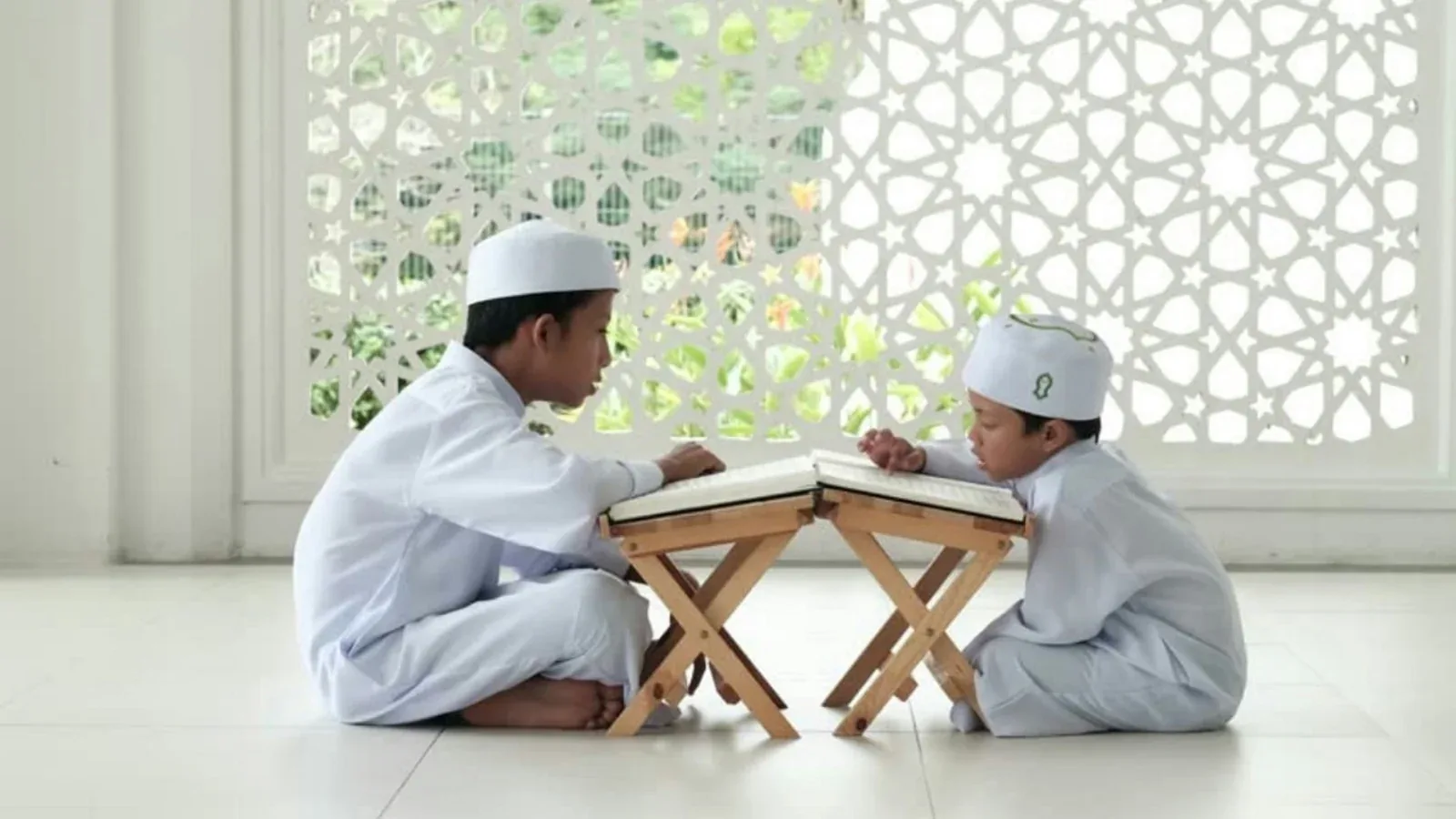
Online Quran Classes in Germany for Muslim Families
Will this help my child recite better, or will it become another screen lesson with little real benefit?
Many Muslim parents in Germany ask that before choosing an online Quran class.
It is a fair concern.
Quran learning is not just about joining a video call. A child may attend lessons for months and still struggle if the teacher does not correct pronunciation, if the class level is wrong, or if parents do not know what to practise at home.
For Muslim families in Germany, online Quran classes can help. But they need structure, suitable teaching, and realistic goals.
This guide explains how online Quran classes in Germany can work for children, beginners, adults, and families who want steady Quran learning from home.
Why Muslim Families in Germany Look for Online Quran Classes
Some families live near a mosque or Islamic center with regular Quran lessons.
Others do not.
One family may live in a smaller German city where local Quran classes are limited. Another may have weekend lessons nearby, but the timing clashes with school, work, or family duties.
Some children also need more individual help than a busy group class can give.
Online Quran classes may help families arrange lessons:
- After school
- On weekends
- During quieter evening hours
- Around work schedules
- With teachers who explain in English
- With one-on-one correction, if that format is available
This is especially relevant for families raising children outside a Muslim-majority environment.
A child may hear Arabic only during class. A parent may not feel confident correcting Tajweed at home. The family may want a steady routine but not know where to begin.
Online learning can help.
But it should not be treated as a shortcut.
What Online Quran Classes Can Help With
Not every student needs the same type of Quran class.
A five-year-old who does not know Arabic letters needs something different from a teenager who can read but struggles with Tajweed. An adult beginner needs a different pace from a Hifz student revising memorized portions.
A good Quran teacher should first understand the student’s level.
Then the learning path becomes clearer.
Quran Reading and Recitation
Some students need help reading the Quran from the Mushaf.
They may know some Arabic letters but struggle when letters join together. They may pause in the wrong place. They may read too quickly. They may guess words instead of reading carefully.
In this case, the class should focus on reading accuracy.
The teacher should listen closely and correct mistakes without rushing the student.
This is where online Quran classes can help, especially when the class is live and the student reads directly to the teacher.
Families comparing recitation-focused learning may also find this external resource on online Quran recitation classes useful.
Tajweed Correction
Tajweed is not something added at the end to make recitation sound better.
It helps the student pronounce letters with more care and recite with better discipline.
A beginner does not need every Tajweed rule at once. That can become too much.
A careful teacher may begin with common issues:
- Letter pronunciation
- Heavy and light letters
- Short vowels
- Madd
- Stopping and starting
- Common mistakes in short Surahs
Parents should be careful with any class that promises “perfect Tajweed” quickly.
Tajweed takes listening, repetition, correction, and time.
For families who want to understand Tajweed as a separate study path, this external page on a Quran Tajweed course may help with comparison.
Noorani Qaida for Beginners
Many children and beginners need to start before Quran reading.
Noorani Qaida online can help students learn:
- Arabic letters
- Letter sounds
- Vowels
- Joined letters
- Basic reading patterns
- Early pronunciation habits
This is especially useful for children who do not hear Arabic at home.
A parent may think, “My child should start reading Quran straight away.”
Sometimes that is not the best starting point.
If the child cannot recognize letters or vowels properly, reading from the Mushaf may become stressful. A short period with Noorani Qaida can build a stronger foundation.
Quran Memorization and Revision
Quran memorization online may help students memorize from home.
But Hifz should not be rushed.
A child who memorizes without revision may forget quickly. A student who repeats without Tajweed correction may carry mistakes into memorization.
A sound memorization plan should include:
- New memorization
- Daily revision
- Older revision
- Teacher listening
- Mistake tracking
- Realistic targets
Parents should avoid any promise of fast memorization.
Some students memorize quickly. Others need more time. Both need patience.
Families comparing Hifz programs may also read more about Quran memorization courses to understand how different academies present memorization paths.
Arabic and Islamic Studies as Related Paths
Some families also want their children to learn Arabic or Islamic studies online.
That can support Quran learning, but it is not the same as Quran recitation.
Arabic can help a student recognize Quranic words and understand meanings more directly over time.
Islamic studies can help children learn basic beliefs, worship, manners, and Muslim identity.
These subjects are useful, but the main focus here remains Quran learning.
A family should know what they are enrolling in:
- Quran reading
- Tajweed
- Noorani Qaida
- Hifz
- Arabic
- Islamic studies
Each one has a different goal.
Online Quran Classes for Kids in Germany
Children need a different teaching style from adults.
A child may lose focus after ten minutes. Another child may feel shy reading aloud. Some children guess words because they want to finish quickly. Others freeze when corrected.
A good online Quran teacher for kids should be patient, clear, and consistent.
The teacher should not only “cover the lesson.”
The teacher should notice how the child reads.
What Children Need from a Quran Teacher
Children need:
- A gentle but firm teacher
- Clear correction
- Repetition without anger
- Short learning goals
- Regular review
- Parent communication
- A pace suited to their age
A child should not be pushed into Hifz before reading becomes stable.
A child should not be left to repeat mistakes because the teacher wants the class to feel easy.
Good teaching sits between pressure and neglect.
Families looking for a child-focused path can review online Quran classes for kids and compare the child’s level with the course structure before deciding.
When a Child Should Start with Noorani Qaida
A child should usually begin with Arabic letters if they cannot read them confidently.
Noorani Qaida may be needed if:
- The child confuses similar letters
- The child forgets vowel sounds
- The child cannot join letters
- The child guesses words
- The child reads from memory instead of the page
- The child struggles with short Surahs despite repetition
This is not a failure.
It is foundation work.
Many reading problems become easier once the basics are corrected.
How Parents Can Support Practice at Home
Parents do not need to be Tajweed experts to help.
They can still support the class by keeping a simple routine.
For example, a child has class on Monday and Thursday.
On Tuesday, the parent asks the child to read the same line for five minutes.
On Wednesday, the child listens to the assigned recitation.
On Friday, the parent checks whether the child remembers the teacher’s correction.
Small practice works better than panic before the next class.
The parent’s role is not to replace the teacher.
The parent helps protect consistency.
Why Short, Consistent Lessons Work Better Than Pressure
Some parents want long lessons because they feel more serious.
For young children, that may not work.
A short, focused lesson with correction can be better than a long class where the child becomes tired and careless.
For many children, progress comes from:
- Regular attendance
- Repeated reading
- Clear correction
- Review at home
- A teacher who knows the child’s level
This is slow work.
That is normal.
Quran Classes for Beginners and Non-Arabic Speakers
Many Muslims in Germany are not fluent in Arabic.
Some adults did not learn Quran reading as children. Some parents want to restart after many years. Some new Muslims want to learn from the beginning.
Beginner Quran classes online should not make the student feel embarrassed.
The teacher should start from the real level.
Not the level the student wishes they had.
Starting from Arabic Letters
A beginner may need to learn:
- Letter names
- Letter sounds
- Letter shapes
- Vowels
- Sukoon
- Shaddah
- Joined letters
- Simple words
This stage needs patience.
Rushing it creates weak reading later.
Learning Pronunciation Step by Step
Pronunciation is one of the hardest parts for non-Arabic speakers.
Some Arabic letters have no exact English sound. Some students replace one letter with another without noticing.
The teacher should correct gently and often.
At first, a beginner may not hear the difference.
With practice, listening improves.
Moving from Qaida to Quran Reading
The move from Noorani Qaida to Quran reading should be gradual.
A student may read exercises well but struggle when opening the Mushaf.
That is expected.
The teacher can begin with short Surahs, repeated words, and familiar patterns.
The goal is not speed.
The goal is careful reading.
English Explanation Without Losing the Arabic Goal
For English-speaking Muslims in Germany, explanation in English can help.
It allows the teacher to explain mistakes, rules, and homework clearly.
But the recitation itself must remain tied to Arabic.
English helps the student understand instructions.
It does not replace learning the Arabic letters and sounds.
Learning Quran Online with Tajweed
Many parents search for “learn Quran online with Tajweed” because they do not want their child to only read words.
They want better recitation.
That is a sound concern.
But Tajweed should be taught in a way the student can carry.
What Tajweed Means in a Beginner Class
For a beginner, Tajweed may begin with practical correction.
The teacher may not start with long rule names.
Instead, the teacher may correct:
- How the student says a letter
- When to stretch a sound
- When to stop
- When a sound is too heavy or too light
- When the student reads too fast
Later, the student can learn more rule names and details.
This keeps Tajweed connected to recitation, not just theory.
Why Correction Matters
A student cannot correct what they do not hear.
This is why teacher feedback matters.
A recorded video may help with listening. An app may help with practice.
But a live teacher can hear the student’s mistake and respond.
That is the value of a real Quran lesson.
What Not to Promise About Tajweed Progress
No careful academy should promise that every student will master Tajweed quickly.
Students differ.
Some have Arabic background. Some do not.
Some practise daily. Others only attend class.
Some children focus well. Others need more repetition.
Tajweed progress depends on teaching, practice, listening, and time.
Online Hifz Classes for Families in Germany
Quran memorization is a serious commitment.
Online Hifz classes can help students who need structure from home. But memorization should not be sold as quick or easy.
A parent should ask a simple question before enrolling a child:
Can my child read well enough to memorize with fewer mistakes?
If the answer is no, reading and Tajweed may need attention first.
Who Is Ready to Begin Memorization
A student may be ready for Hifz if they can:
- Read the assigned portion with reasonable accuracy
- Repeat consistently
- Accept correction
- Revise older memorization
- Attend lessons regularly
- Practice outside class
Young children can memorize.
But they need support.
A child should not carry the full responsibility alone.
Why Muraja’ah Matters
Muraja’ah means revision.
Without revision, memorization weakens.
Many students enjoy new memorization because it feels like progress. Revision can feel slower. But revision protects what the student has already learned.
A sound Hifz plan should include both.
Parents should ask how the teacher balances new memorization and revision.
How Parents Should Think About Pace
A fast pace may look impressive for a few weeks.
Then mistakes appear.
The student forgets old portions. The child becomes tired. The parent becomes frustrated.
A better pace is one the student can maintain.
For some students, that may be a few lines. For others, it may be more.
The right amount is not the same for every family.
Why Hifz Should Not Be Rushed
Hifz is not only about finishing.
It is about preserving what was memorized with care.
A rushed plan may create weak memorization, poor revision habits, and stress at home.
Parents should respect the effort.
They should also respect the child’s capacity.
Female Quran Teachers and Classes for Sisters
Some families prefer a female Quran teacher for daughters.
Some adult sisters also feel more comfortable learning with a female teacher.
This is a reasonable preference.
Before enrolling, families should ask:
- Are female teachers available?
- What subjects do they teach?
- Are classes one-on-one or group-based?
- Can parents supervise children’s lessons?
- How does communication with the academy work?
- What happens if the teacher is absent?
Do not assume every academy offers female teachers.
Ask first.
How to Choose an Online Quran Teacher in Germany
Choosing a Quran teacher online should not be based only on the website’s strongest claim.
Parents should check the real teaching setup.
Teacher Background
Ask about the teacher’s training.
For Tajweed, ask how the teacher corrects recitation.
For Hifz, ask how revision is tracked.
For children, ask whether the teacher has experience teaching young learners.
Words like “certified,” “qualified,” and “native speaker” are not enough by themselves.
A native Arabic speaker is not automatically a good teacher.
A good teacher needs knowledge, patience, and teaching skill.
Class Format
Ask whether the class is:
- One-on-one
- Group-based
- Live
- Recorded
- Fixed schedule
- Flexible schedule
For young children and beginners, live correction is often important.
A child who reads alone with no correction may repeat the same mistake for weeks.
Language Support
Many Muslim families in Germany use English as the main learning language.
Some families may prefer German, Arabic, Urdu, Turkish, or another language.
Ask what language the teacher uses for explanation.
For Quran recitation, Arabic remains the focus.
But clear explanation helps the student understand what to fix.
Trial Lesson
A trial lesson can help the family judge fit.
During the trial, notice:
- Does the teacher check the student’s level?
- Does the teacher correct clearly?
- Does the student understand the instructions?
- Is the pace suitable?
- Does the class feel serious without being harsh?
- Does the parent know what to practise after class?
Do not judge only by friendliness.
A kind teacher still needs to correct mistakes.
Parent Updates
For children, parent updates matter.
A parent should know:
- What the child read
- What mistakes need practice
- What homework is expected
- Whether the child is ready to move forward
- Whether revision is weak
Without updates, parents may not know if progress is real.
Schedule in Germany Time
Families in Germany need lessons that fit CET or CEST, depending on the season.
This sounds simple, but it matters.
A class that works for another country may be too late for a young child in Germany.
Parents should ask for lesson times that fit school days, weekends, and family routines.
Child Supervision
Online classes for children should not become unsupervised screen time.
Parents should know:
- Which platform is used
- Whether the parent can stay nearby
- How teacher communication happens
- Whether lessons are recorded or monitored
- Who to contact about concerns
No academy should make vague safety claims without clear practice.
Parents should ask direct questions.
Common Mistakes Parents Should Avoid
Some mistakes are easy to make because many websites use the same strong words.
Choosing Only by Price
Low fees may matter for a family budget.
But price alone should not decide.
A weak class can waste months.
Look at teacher quality, correction, schedule, and communication.
Trusting “Best Academy” Claims
Many websites say they are the best.
That does not prove anything.
A better question is:
Does this class fit my child’s level, schedule, and learning goal?
Believing Fast Hifz Promises
Fast memorization claims can attract parents.
They can also harm the student.
Hifz needs revision and stability.
Ask about the plan, not just the target.
Ignoring Revision
Some students keep moving forward while old lessons weaken.
This is common.
Parents should ask how revision is built into the class.
For Hifz, revision is not optional.
Treating Quran Class Like Passive Screen Time
A Quran class is not just another online activity.
The child has to read, listen, repeat, and practise.
Parents should help create the right environment:
- Quiet room
- Mushaf or Qaida ready
- Camera and sound checked
- No games open
- Short practice between lessons
Small details affect learning.
A Simple Weekly Quran Routine for Families
Every family’s schedule is different.
Still, a simple routine can help.
For Young Children
Keep it short.
A useful routine may include:
- Two or three lessons per week
- Five minutes of revision on non-class days
- Parent nearby during class
- One small target at a time
Young children need repetition more than long lectures.
For Beginners
Beginners need steady contact with letters and sounds.
A simple plan:
- Review letters or Qaida daily for a few minutes
- Read slowly
- Repeat teacher corrections
- Avoid jumping ahead
- Listen to assigned recitation if the teacher recommends it
The early stage shapes later reading.
For Hifz Students
Hifz students need a clear balance.
A weekly plan may include:
- New memorization
- Recent revision
- Older revision
- Teacher listening
- Mistake correction
- Parent check-ins
If revision becomes weak, reduce new memorization until the old portion becomes stronger.
For Busy Parents
Busy parents should not aim for a perfect routine.
Aim for a routine that survives normal family life.
Ten focused minutes may be better than a one-hour plan that happens once and then disappears.
Put Quran practice near an existing habit.
For example:
- After Maghrib
- After school snack
- Before weekend breakfast
- Before the next online class
Consistency grows from realistic timing.
Are Online Quran Classes Better Than Local Mosque Classes?
Not always.
Local mosque classes can be valuable. Children meet other Muslims, learn discipline, and feel connected to a community.
Online classes can help when local options are limited, too far, too crowded, or not suited to the child’s level.
Some families use both.
A child may attend a mosque class on the weekend and take online Tajweed correction during the week.
The question is not which format is always better.
The question is which format helps this student learn with care and consistency.
A Careful Next Step for Families
A Muslim family in Germany should not choose a Quran class because a website sounds confident.
Start with the student’s real level.
Ask what the teacher will correct.
Ask how revision works.
Ask whether the schedule fits Germany time.
Ask how parents receive feedback.
Al Quran Recitation Academy offers learning paths for children, beginners, Tajweed, Noorani Qaida, Quran memorization, Arabic, and Islamic studies. Families can begin by checking the student’s level and asking which teacher, schedule, and course path fits their needs.
The goal is not pressure.
The goal is steady learning, clearer recitation, better correction, and a routine the family can maintain.
Ready to start? Visit our dedicated Online Quran Classes in Germany page for 5–9 PM CET slots, lessons in Arabic or English, and two free trial lessons.
Frequently Asked Questions
Are online Quran classes suitable for Muslim families in Germany?
They can be suitable when the class is live, structured, and matched to the student’s level. Families should check the teacher, schedule, class format, and parent communication before enrolling.
Can children learn Quran online from Germany?
Yes, children can learn Quran online if the class is age-appropriate and supervised by parents. Young children usually need short lessons, repetition, and a teacher who corrects gently.
What age should a child start online Quran classes?
There is no single age for every child. Some children can begin with Arabic letters around early childhood, while others need more time. The better question is whether the child can sit, listen, repeat, and follow simple instruction.
Does my child need Arabic before starting Quran classes?
No. Many children start with Arabic letters through Noorani Qaida or a similar beginner method. Arabic knowledge helps, but it is not required before the first lesson.
What is the difference between Noorani Qaida, Quran reading, Tajweed, and Hifz?
Noorani Qaida teaches basic Arabic reading foundations. Quran reading helps the student read from the Mushaf. Tajweed improves pronunciation and recitation rules. Hifz is Quran memorization with regular revision.
Can beginners learn Quran online?
Yes. Beginner Quran classes online can start from Arabic letters, vowels, pronunciation, and simple reading. The teacher should move at the student’s level.
Can students learn Tajweed online?
Students can learn Tajweed online when the class includes live listening and correction. Tajweed should be taught gradually, especially for beginners.
Can children memorize Quran online?
Children can memorize Quran online if they have a suitable teacher, a clear plan, and parent support. Memorization should include revision, not only new lessons.
How long does Quran memorization take?
It depends on the student’s age, reading level, revision, schedule, and consistency. Avoid any program that promises the same fast timeline for every student.
Are female Quran teachers available for sisters and girls?
Some academies offer female Quran teachers. Families should ask before enrolling and check whether female teachers are available for the needed subject and time.
What should parents check before choosing an online Quran teacher?
Parents should check teacher background, Tajweed correction, child teaching experience, class format, language support, schedule, parent updates, and trial lesson quality.
Can online Quran lessons fit around German school hours?
They can, if the academy offers times that work with Germany’s time zone and the family’s routine. Parents should confirm lesson times before registering.
Are one-on-one Quran classes better for children?
One-on-one classes may help children who need individual correction. Group classes may suit some students too. The best choice depends on the child’s age, focus, confidence, and learning level.
Should parents sit with young children during online Quran lessons?
For young children, yes. A parent should usually stay nearby, especially in early lessons. This helps with focus, technical issues, and follow-up practice.
Can new Muslims in Germany join beginner Quran classes?
Yes. New Muslims can begin with Arabic letters, basic recitation, and simple Quran reading. The class should be patient, clear, and suitable for a complete beginner.
Share this article
Start Your Quran Journey Today
Book 2 FREE trial lessons with a certified teacher — no credit card required.
Book 2 FREE Trial Lessons