Quran Learning
Best Online Quran Classes for Kids in the UK: A Parent’s Guide
“Should my child start with Quran reading, Tajweed, or Hifz?” Many parents ask this because the path is not always clear.

Best Online Quran Classes for Kids in the UK: A Parent’s Guide
“Should my child start with Quran reading, Tajweed, or Hifz?”
Many parents ask this because the path is not always clear.
Some children are pushed into memorization before they can read Arabic letters with confidence. Some are given long Tajweed explanations before they can manage a short lesson. Others join online Quran classes for kids, then lose interest because the class does not fit their age, level, or attention span.
A good class should begin with the child in front of the teacher.
Not with a course title.
Not with a parent’s hope alone.
Not with a promise of fast results.
For Muslim parents in the UK, online Quran classes can be useful when lessons are structured, teachers are patient, and parents stay involved. The aim should be steady learning: clearer recitation, gentle Tajweed correction, better Arabic reading, and regular contact with the Qur’an.
Why UK Parents Look for Online Quran Classes for Kids
Many parents are not choosing online Quran classes because they dislike local mosque learning.
They are trying to solve real family problems.
School finishes late.
The nearest class may be far away.
Weekends are crowded.
Some children need one-to-one attention.
Some parents want a teacher who can explain clearly in English.
Some families need lessons that fit around UK school routines.
This is where online Quran classes can help.
A child can learn from home. Parents can stay nearby. Lessons can be shorter and more focused. The teacher can listen to the child’s recitation and correct mistakes without moving at the speed of a whole group.
But online learning is not automatically better.
A weak online class is still weak. A distracted child will not improve just because the lesson happens on a screen. A teacher who rushes correction can make a child nervous. A course that promises quick memorization may create pressure instead of progress.
The format helps only when the teaching is sound.
What Should Online Quran Classes for Kids Include?
A useful kids Quran class should not throw every subject at the child at once.
Most children need a clear path.
Quran Reading and Recitation Correction
For many beginners, the first question is simple:
Can the child recognise Arabic letters?
Can they join letters correctly?
Can they read short words without guessing?
Can they recite short Surahs with correction?
This stage matters.
If a child keeps misreading letters, memorization becomes harder. If pronunciation mistakes are ignored, they may become habits. If the lesson is too long, the child may start to dislike the class.
Good Quran lessons for kids should include listening, reading, correction, and repetition.
Not too much at once.
Parents who want to compare recitation-focused learning can also look at this overview of online Quran recitation classes.
Noorani Qaida for Beginners
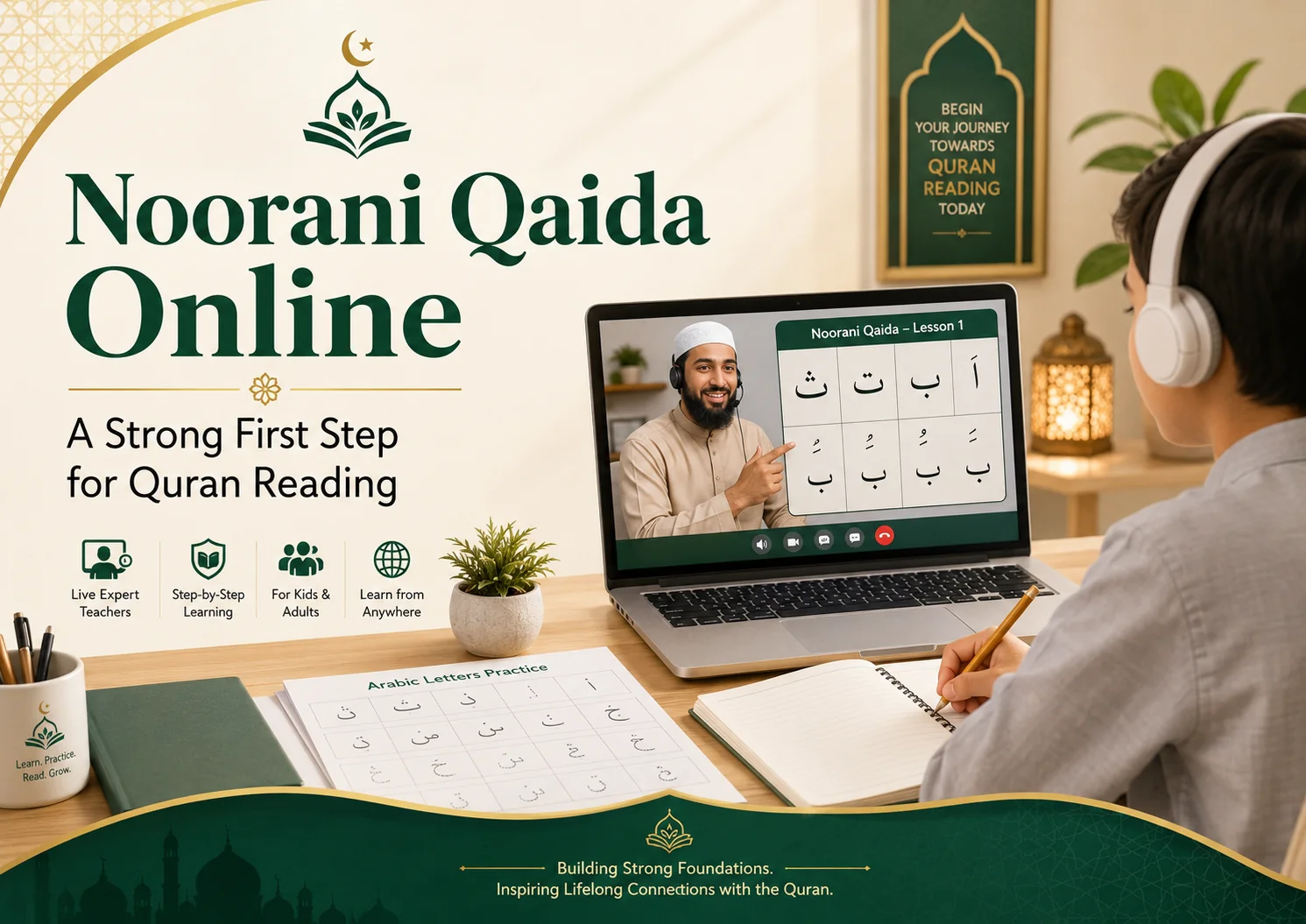
Noorani Qaida for kids can help children build the basics before moving into longer recitation.
It usually supports:
- Arabic letter recognition
- letter joining
- short vowels
- sukoon
- shaddah
- basic reading fluency
Not every child needs the same starting point.
A child who already reads Arabic may not need to restart from the beginning. A child who guesses words may need to slow down and rebuild the basics.
The teacher should assess first.
For children who still need the foundations of Arabic reading, a structured Noorani Qaida course may be a suitable starting point.
Tajweed for Kids, Taught Gradually
Tajweed for kids should be practical.
A young child does not need long technical explanations in the first lesson. They need to hear the sound, repeat it, and receive calm correction.
A teacher may correct the difference between similar Arabic letters.
They may ask the child to repeat one word slowly.
They may focus on one rule in a short Surah instead of explaining several rules together.
This protects the child from overload.
Tajweed is not only a subject title. It is a habit built through listening, correction, and practice.
Parents who want to understand Tajweed as a separate learning path can read more about a Quran Tajweed course and compare how Tajweed is usually structured for learners.
Memorization When the Child Is Ready
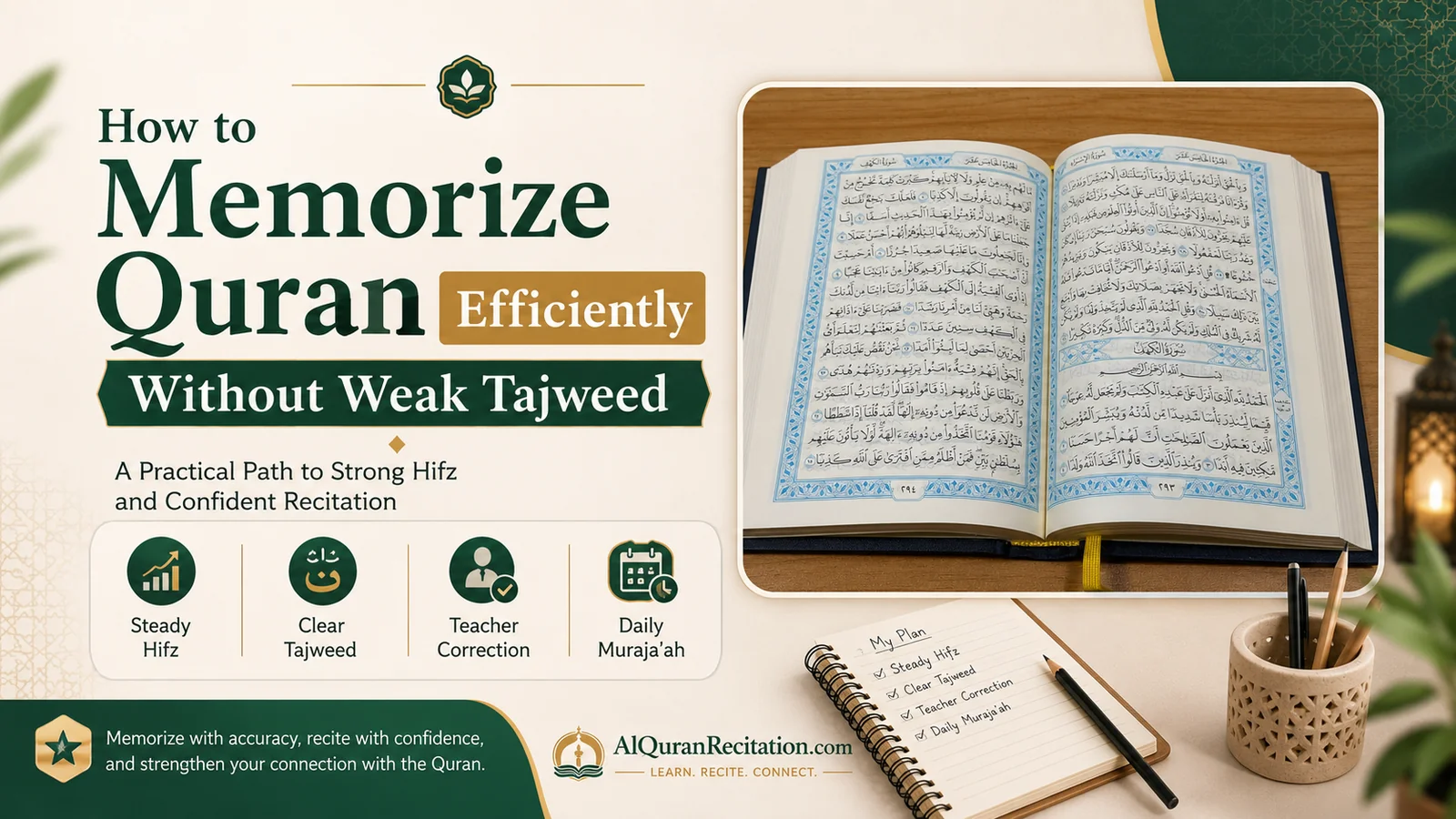
Some parents search for Hifz classes for kids or Quran memorization for kids because they want their child to memorise Qur’an.
That intention deserves respect.
But memorization should not be rushed.
Before starting a serious Hifz routine, a child should have some stability in reading and recitation. They should also be able to revise. Memorization without revision can become frustrating. Memorization with repeated pronunciation mistakes may need more correction later.
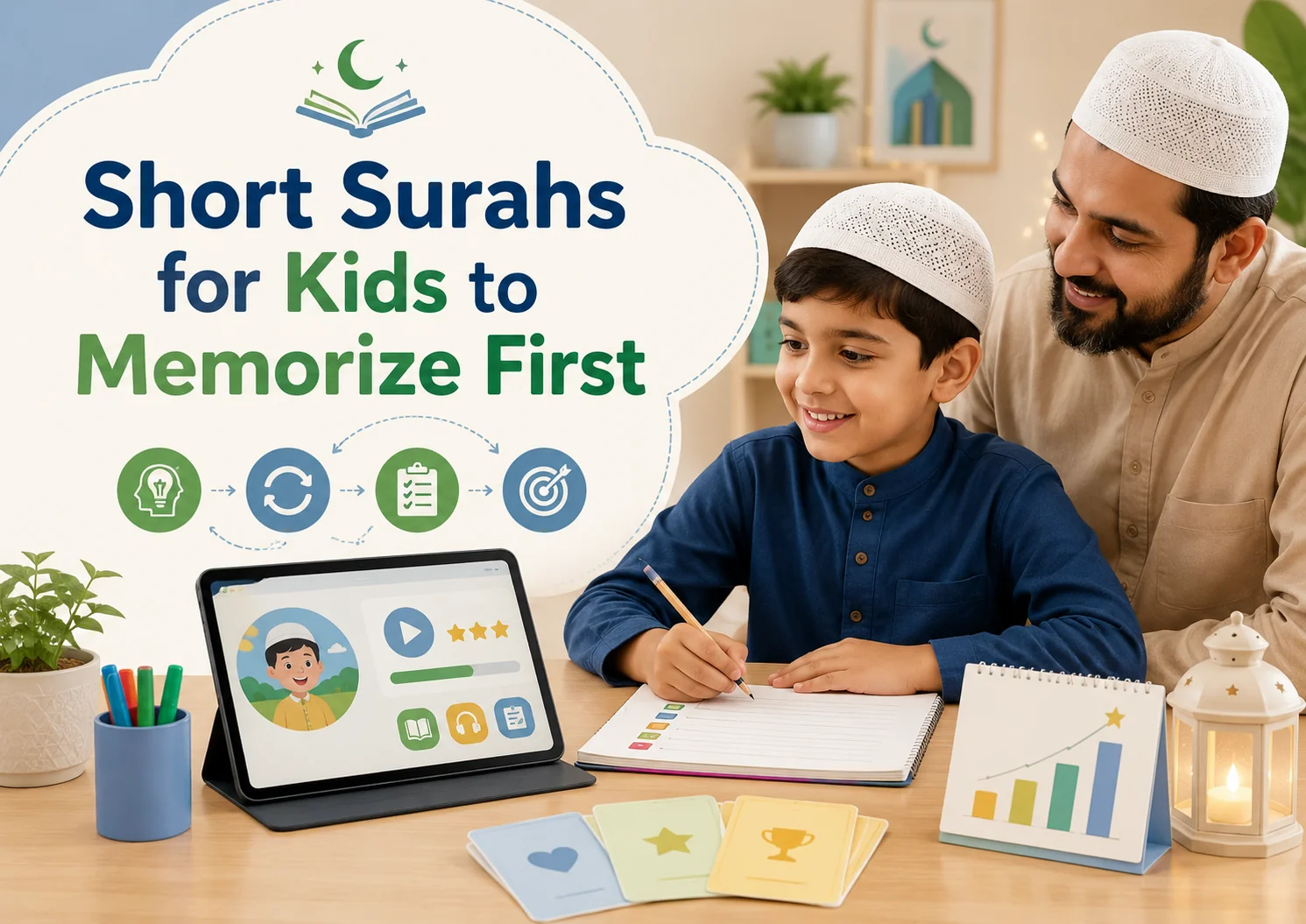
For younger children, short Surahs may be enough at first.
The teacher should guide the parent honestly. Some children are ready for regular memorization. Others need more time with reading, listening, and recitation correction.
If your child is ready for a memorization path, you can review a structured Quran memorization course. For broader comparison, this page on Quran memorization courses may also help parents see how memorization programs are commonly presented.
What Should Come First: Reading, Tajweed, Arabic, or Hifz?
There is no single order for every child.
But there is a sensible order for most children.
For Complete Beginners
Start with Arabic letters and short reading.
A beginner may need:
- Arabic alphabet recognition
- correct letter sounds
- joining letters
- short vowels
- short Quranic words
- simple recitation practice
At this stage, online Quran classes with Tajweed should not become too technical. The teacher can correct pronunciation without turning the lesson into an advanced rules class.
For Children Who Can Already Read
If the child can read but makes recitation mistakes, the next focus should be correction.
This may include:
- Makharij correction
- smoother reading
- stopping and starting correctly
- basic Tajweed rules
- listening and repeating
The teacher should not only say “wrong” and move on.
Children need to know what to fix. They need to hear the correct sound. They need enough repetition to improve.
For Children Who Want to Start Hifz
If the child can recite with reasonable correction, memorization can begin in small steps.
Parents should ask:
- How much will the child memorise each week?
- How much revision is required?
- Will the teacher correct recitation before memorization?
- What happens if the child forgets?
- Will the pace change during school exams or busy weeks?
A good Hifz plan for children is steady. It should not depend on pressure.
How to Choose a Quran Teacher for Kids Online
The teacher matters more than the platform.
A clear video call cannot fix poor teaching. A nice website cannot replace patience. A long list of course names does not prove that a teacher can work well with children.
When choosing a Quran teacher for kids online, parents should look beyond the headline.
Patience and Correction Style
Children repeat mistakes.
That is normal.
A good teacher corrects without embarrassing the child. The tone should be calm. The correction should be clear. The child should understand what to repeat.
A harsh teacher may get short-term obedience, but the child may begin to fear the lesson.
That is not a healthy learning environment.
Experience Teaching Children
Teaching adults and teaching children are not the same.
Children need:
- shorter explanations
- regular review
- clear routines
- small goals
- flexible pacing
- encouragement without exaggeration
An online Quran tutor for kids should know how to keep the lesson focused without turning it into entertainment only.
The class should feel warm, but still serious.
Clear English Communication
Many Muslim children in the UK understand Islamic terms through English first.
A teacher who can explain instructions clearly in English can help the child follow the lesson better.
This does not make Arabic less important. It simply means the teacher can guide the child at their level.
For parents, English communication matters too. You should understand what your child is learning, what needs practice, and what the next step is.
Parent Updates
Parents should not be left guessing.
After a few lessons, you should know:
- what your child is studying
- which mistakes keep appearing
- what to revise at home
- whether the pace is suitable
- whether the child is ready to move forward
Progress does not always mean finishing pages quickly.
Sometimes progress means fewer repeated mistakes. Sometimes it means better focus. Sometimes it means the child can recite a short passage with fewer corrections.
One-to-One vs Group Quran Classes for Children
Both can work.
The better choice depends on the child.
When One-to-One Lessons Help
One-to-one Quran classes for children may suit a child who:
- needs close correction
- feels shy in groups
- has many reading mistakes
- learns slowly
- needs flexible timing
- is preparing for memorization
- loses focus when other children are present
In a one-to-one class, the teacher can hear every mistake. The child also has more time to recite.
This can be useful for Tajweed and recitation correction.
When Group Lessons May Work
Group lessons may suit a child who:
- enjoys learning with others
- already reads with confidence
- benefits from routine
- does not need constant individual correction
- learns well by listening to peers
The risk is that quieter children may hide. They may read less. Their mistakes may receive less attention.
Parents should ask how much individual recitation time each child receives.
How Online Quran Lessons Fit Around UK Family Life
A class that looks good on paper may fail if it does not fit the family routine.
Children in the UK often have school, homework, clubs, and weekend activities. A Quran lesson at the wrong time can become a weekly struggle.
After-School Lessons
After-school lessons can work for some children.
But not always straight after a long day. A tired or hungry child may struggle to focus.
A short break before class may help. Younger children may need shorter lessons. Older children may manage longer sessions if the timing is stable.
Weekend Lessons
Weekend lessons can work well for families who want a calmer schedule.
But weekends can also become crowded. If the lesson keeps being cancelled, progress will slow.
Consistency matters more than finding the perfect day.
Short Sessions for Younger Children
A younger child may not need a long lesson.
For some children, a shorter focused session is better than a long lesson filled with reminders to sit still.
Parents should not judge quality by lesson length alone.
A 25-minute lesson with careful correction may be better than an hour where the child is tired and unfocused.
Safety and Parent Involvement in Online Quran Classes
Parents should stay involved in online learning.
This does not mean sitting inside every lesson forever. It means knowing the teacher, the schedule, the platform, and the child’s progress.
A sensible setup may include:
- clear lesson times
- parent access to communication
- professional teacher conduct
- visible class arrangements for younger children
- regular feedback
- agreed rules for missed lessons and rescheduling
Safety should not be used as a marketing word.
It should be a practical checklist.
Parents should know who is teaching their child and how lessons are managed.
Common Mistakes Parents Make When Choosing Kids Quran Classes
Choosing Only by Price
Price matters. Families have budgets.
But the cheapest class may not give enough correction. The most expensive class is not automatically better.
Ask what the child actually receives:
- How often will they recite?
- Will mistakes be corrected?
- Will parents get feedback?
- Is the teacher used to teaching children?
- Is there a clear level plan?
Believing Fast Memorization Claims
Be careful with any course that makes memorization sound quick and easy for every child.
Some children memorise quickly. Others need more repetition. School routines, age, reading ability, and revision habits all affect progress.
A careful teacher will not promise the same speed for every child.
Ignoring the Child’s Current Level
Parents sometimes enrol a child in a course because of the course title, not because of the child’s level.
A child may need Noorani Qaida before recitation.
A child may need recitation correction before Hifz.
A child may need confidence before longer lessons.
The first step should be assessment.
Forcing Advanced Tajweed Too Early
Tajweed matters.
But the way it is taught to children matters too.
A child who is still learning to read should not be overwhelmed with several rules at once. The teacher can build correct sounds through practice, then introduce rules gradually.
Not Checking Teacher-Child Fit
A qualified teacher may still not be the right teacher for a particular child.
Some children need a softer tone. Some need firmer structure. Some need more repetition. Some need shorter tasks.
Parents should watch the child’s response after the first few lessons.
Does the child understand what to practise?
Does the child seem afraid of making mistakes?
Does the teacher notice repeated errors?
Is the pace realistic?
These questions matter.
Questions to Ask Before Enrolling Your Child
Before choosing Quran classes for kids online, ask direct questions.
What Level Will My Child Start At?
The academy should not place every child at the same starting point.
A beginner, a slow reader, and a child who already recites short Surahs need different plans.
Will the Teacher Assess Recitation First?
Assessment helps avoid guessing.
The teacher should listen to the child read and identify the next step.
How Are Mistakes Corrected?
This is one of the most important questions.
Correction should be clear, repeated, and calm. The child should hear the correct sound and practise it.
Will Parents Receive Updates?
Parents need to know what to revise at home.
Even a short note can help:
“Practise the short vowels.”
“Repeat this Surah slowly.”
“Work on this letter sound.”
“Revise the last two lines before the next lesson.”
Is Memorization Optional or Required?
Not every child should begin with Hifz.
Ask whether memorization starts only after the teacher checks reading and recitation.
Can Lesson Times Fit UK School Routines?
The right time helps the child stay consistent.
Ask about after-school, evening, or weekend options. Also ask how missed lessons are handled.
How Parents Can Support Quran Learning at Home
The parent does not need to become the teacher.
But home support matters.
A few simple habits can help:
- keep the lesson time stable
- prepare the child before class
- reduce noise and distractions
- ask the teacher what to revise
- listen to short practice without harsh correction
- praise effort without exaggerating progress
- avoid comparing siblings
- keep memorization revision regular
Do not turn every mistake into a lecture.
Children need correction, but they also need room to learn.
A calm home routine can make online Quran lessons more effective.
A Final Parent Checklist
Before choosing online Quran classes for kids in the UK, check these points:
- The class starts from your child’s real level.
- The teacher can work with children.
- Quran reading and recitation correction are not rushed.
- Tajweed is taught gradually.
- Hifz is offered with revision, not pressure.
- Parents receive clear feedback.
- Lesson times fit the family routine.
- The academy avoids unrealistic promises.
- The child feels safe enough to make mistakes and improve.
This is a better measure than a big claim on a website.
Learning with Alquranrecitation.com
Alquranrecitation.com teaches Qur’an recitation, Tajweed, Arabic, and Islamic studies for English-speaking Muslim families.
For children, the better starting point is not always the most advanced course. It is the course that matches the child’s level.
Parents can explore the Quran for Kids course and ask about Quran reading, Tajweed correction, Arabic foundations, and memorization options before choosing a path. A level check or teacher feedback can help you decide whether your child should begin with Noorani Qaida, recitation practice, Tajweed, or a memorization plan.
The aim is steady learning with care.
Not pressure.
Not speed.
Not promises.
FAQ
What are the best online Quran classes for kids in the UK?
The best class for your child is the one that matches their age, reading level, attention span, and need for correction. Look for patient teaching, clear parent feedback, gradual Tajweed, and a realistic learning plan.
Are Quran classes for kids online suitable for beginners?
Yes, online classes can suit beginners when the teacher starts with Arabic letters, short vowels, joining letters, and simple recitation. Younger children may need shorter lessons and more parent support.
Should my child learn Noorani Qaida first?
A child who cannot read Arabic letters or join words may benefit from Noorani Qaida first. A child who already reads may need recitation correction instead. The teacher should assess before deciding.
Can children learn Tajweed online?
Children can learn Tajweed online when the teacher listens carefully, corrects sounds, and introduces rules gradually. For young children, Tajweed should be taught through practice and repetition, not heavy theory.
Should my child start Hifz before Tajweed?
Some children can memorise short Surahs while improving recitation. But serious Hifz should not be rushed if the child struggles with reading or repeated pronunciation mistakes. Recitation correction and revision should be part of the plan.
Are one-to-one Quran lessons better for kids?
One-to-one lessons can help children who need close correction, flexible pacing, or more recitation time. Group lessons can work for confident children, but parents should ask how much individual reading time each child receives.
How long should an online Quran lesson be for a child?
It depends on the child’s age and focus. Younger children may do better with shorter lessons. Older children may manage longer sessions. A focused short lesson can be more useful than a long lesson where the child is tired.
What should I ask an online Quran teacher before enrolling my child?
Ask how the teacher assesses level, corrects mistakes, teaches Tajweed, handles memorization, updates parents, and adjusts pace for children. Ask about lesson timing for UK school routines too.
How can parents support Quran learning at home?
Keep a regular lesson routine. Ask the teacher what to revise. Listen to short practice sessions. Avoid pressure and comparison. Help the child return to the lesson with focus and respect.
Ready to start? Visit our dedicated Online Quran Classes in the UK page for after-school slots in UK time, female teachers, and two free trial lessons.
Share this article
Start Your Quran Journey Today
Book 2 FREE trial lessons with a certified teacher — no credit card required.
Book 2 FREE Trial Lessons