Quran for Kids
Tajweed for Kids: How Parents Can Help Without Pressure
Many parents want their children to recite the Qur’an with better Tajweed, but too much correction can make practice tense. This guide shows how to help children with calm routines, gentle correction, and teacher feedback.
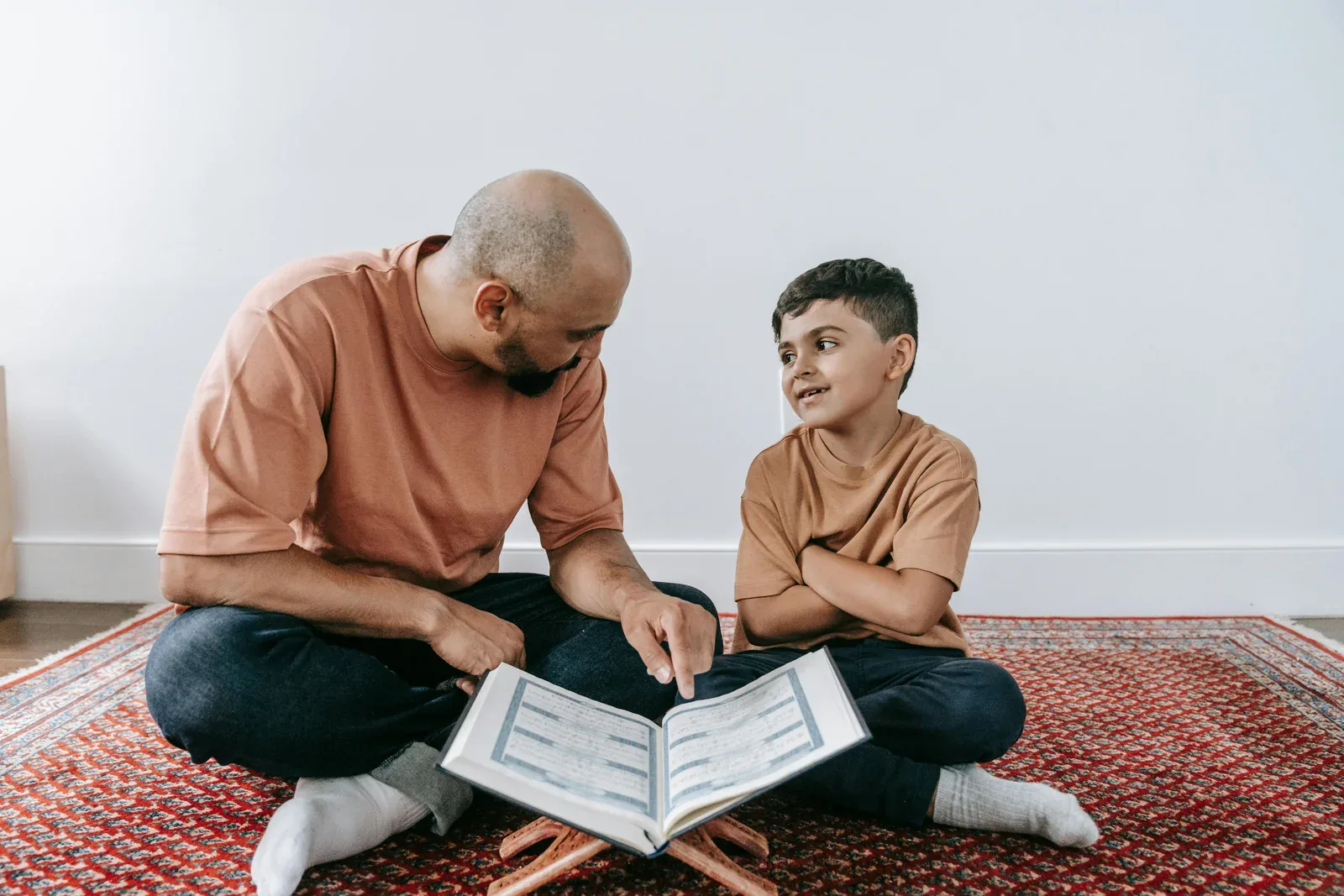
Tajweed for Kids: How Parents Can Help Without Pressure
Your child keeps making the same Tajweed mistake. You correct it once, then twice, then again. Soon the lesson feels tense, and your child does not want to read.
Many parents know this moment. They care about Qur’an recitation, so they correct too much. The intention is good, but the practice becomes heavy.
Tajweed for kids needs patience. Children are learning sounds, letters, rhythm, attention, and confidence at the same time. They need correction, but they also need calm repetition. Parents usually help most when they become steady helpers, not strict examiners.
Why Tajweed for Kids Needs Patience
Tajweed is not only a list of rules. For a child, it starts with sound. Where the tongue goes. How the mouth opens. How long a sound is held. Where to stop. When to continue.
That takes time.
A child may understand a correction during one lesson and forget it the next day. That does not always mean laziness. Often, the sound has not become a habit yet.
For example, a child may know that a letter should come from the throat. But when reading a full line, the child may return to the easier sound. This happens often in early Quran lessons for kids. The parent’s job is not to fix everything at once. The parent’s job is to help the child return to the correct sound without shame.
- Children need time to hear the difference between similar sounds.
- They may copy a sound before they understand the rule name.
- They often need review before a correction becomes natural.
- They may forget when reading a longer line.
- They learn better when correction stays calm and specific.
So the aim at home is not to finish more pages. The aim is to help the child practise with care and return to the teacher’s guidance.
What Parents Should Correct at Home
Parents can help with Tajweed practice at home. But they should not try to become the main Tajweed teacher unless they are qualified.
Home correction should stay simple. It should follow what the teacher has already taught.
If the child makes three mistakes in one line, do not stop for all three. Choose the one mistake linked to the current lesson. If the teacher is working on madd, focus on madd. If the teacher is working on clear letter pronunciation, focus on one letter.
Some mistakes are easy for a parent to notice. A missed stretch. A skipped word. A repeated line. A letter the teacher has corrected many times.
Other mistakes need trained listening. Similar letters, subtle makharij, and advanced rules of Tajweed may need the teacher’s ear. If you are unsure, do not guess. Write the word down and ask the teacher.
What Parents Should Leave to the Teacher
Makharij details
Makharij means the places where letters come from. Some letters are easy for children to hear. Others are close in sound, especially for non-Arabic speakers.
If your child struggles with letters such as ع, ح, خ, ص, ض, ط, ظ, ق, or غ, avoid long home lectures. Let the teacher guide the sound. At home, help your child repeat the exact practice the teacher assigned.
Similar letters
Children may confuse similar letters because their ears and tongues are still being trained.
For example, a child may mix س and ص, or ت and ط. This needs patience. It also needs clear modelling.
Advanced Tajweed rules
Rules such as ghunnah, madd types, waqf rules, and some cases of noon sakinah or meem sakinah can be taught gradually.
Children should not feel they must understand every term before they can recite. The teacher can decide when the child is ready for more detail.
Habitual recitation errors
Some mistakes become habits. They may need slow correction across many lessons.
Do not turn those habits into daily arguments. Ask the teacher for a small correction plan. Then follow it with patience.
Unclear pronunciation issues
A parent may notice that something sounds wrong but still not know how to fix it. That is fine.
If the parent cannot pronounce a sound well, the safer role is listening, encouraging, and following up with the teacher.
Corrections that differ from the teacher’s method
A child can become confused when a parent gives one correction and the teacher gives another.
Use the teacher’s current lesson as the guide. Ask, “What should we practise at home this week?”
Moving too quickly to new material
Parents often want fast progress. They ask for a new surah, a new rule, or a longer assignment.
But children need review. If the old sound is still weak, adding more may create confusion.
Simple Tajweed Habits That Help Children
Children often learn better through small habits than long explanations. The routine should be easy enough to repeat.
Listen and repeat
Listening matters. A child who hears correct Quran recitation with Tajweed again and again may start to notice the sound pattern more clearly.
Choose a short passage. Let the child listen. Then let the child repeat one phrase at a time.
Short daily practice
Short practice can work well for children. Ten calm minutes may help more than thirty forced minutes.
The right time depends on the child’s age, mood, and level. Younger children may need very short sessions. Older children may manage more.
Record and listen back
Some children notice their mistakes when they hear their own voice.
Use this carefully. Do not play the recording to embarrass the child. Use it as a learning tool. You can say, “Let us listen for one sound only.”
How to Help Without Pressure
Pressure does not always look like shouting. Sometimes it sounds like too many corrections. Sometimes it looks like comparison with siblings. Sometimes it comes from asking a tired child to read “just one more time” again and again.
- Start with what the child did right.
- Correct one point, not every point.
- Use the teacher’s current lesson as the practice target.
- Stop before the child becomes upset.
- Keep Qur’an practice separate from punishment.
Parents should care about Tajweed. They should also care about the child’s ability to keep learning without fear. A short, calm session is not a failure. It may be the wise choice for that day.
When Your Child Resists Practice
Check the timing
Resistance is not always rejection of Qur’an learning. Sometimes the lesson is too long. Sometimes the child is confused. Sometimes correction feels embarrassing.
Do not choose the hardest part of the day for practice. Some children do better after rest. Some do better before play. Some need a small break after school before Quran lessons for kids.
Reduce the task
If the child resists a full page, reduce it to three lines.
If three lines are too much, read one line. If reading is tense, listen together first. The aim is not to lower respect for the lesson. The aim is to make the next step possible.
Ask the teacher for one home task
Parents sometimes ask children to practise too much because they do not know the teacher’s priority.
Ask for one home task. For example, the teacher may ask the child to practise one letter, repeat one short passage, or focus on stopping correctly.
Return to listening when reading becomes tense
Listening is still learning.
If reading becomes a struggle, sit with the child and listen to the assigned passage. Then ask the child to repeat one short part.
Avoid turning practice into a test
Some children become tense because every reading session feels like an exam.
Let some sessions be simple review. Let the child read slowly. Give correction after listening, not after every word.
When Online Quran Classes for Kids May Help
Parents can do a lot at home, but some parts of Tajweed need teacher feedback.
Online Quran classes for kids may help when the teacher listens carefully, corrects gently, and gives parents clear practice steps. The class should not only move through pages. It should help the child build better recitation habits over time.
If you are not confident in your own Tajweed, do not carry the full correction role alone. You can still support your child by making sure the child attends class on time, helping with short review, listening without harsh correction, and asking the teacher for weekly focus points.
For beginners, Noorani Qaida online may also help build letter recognition and pronunciation foundations before longer recitation. Families that need wider Qur’an learning support can also look at online Quran classes or, when suitable, Quran memorization online.
If your family needs teacher support, AlQuranRecitation.com offers child-focused Qur’an learning with attention to recitation, Tajweed correction, Arabic understanding, and steady practice. Parents can use class feedback to guide short home review without turning practice into pressure.
Useful Course and Source Links
- online Quran classes
- online Quran classes for kids
- Quran memorization online
- Noorani Qaida online
- online Quran recitation classes
- Quran Tajweed course
- Quran memorization courses
Frequently Asked Questions
Can parents teach Tajweed for kids at home?
Parents can support Tajweed practice at home through listening, repetition, short review, and encouragement. Detailed correction should come from a qualified teacher if the parent is not trained in Tajweed.
Should parents correct every Tajweed mistake?
No. Correcting every mistake can overwhelm a child. It is better to focus on one clear issue connected to the teacher’s current lesson.
What age should children start learning Tajweed?
Children differ. Some begin with listening and Arabic letters at a young age, while others are ready for more structured Tajweed later. The lesson should match the child’s ability.
How long should kids practise Tajweed each day?
Short, regular practice is usually better than long sessions. Many children benefit from a few calm minutes focused on one task, but the right length depends on age, attention, and mood.
What if my child refuses Qur’an practice?
Check the timing, lesson length, tiredness, and amount of correction. Reduce the task, return to listening, and ask the teacher for one simple home practice goal.
Do children need Noorani Qaida before Tajweed?
Noorani Qaida can help many beginners learn Arabic letters, joining, and basic pronunciation. It can support Tajweed foundations, but the best starting point depends on the child’s level.
Are online Quran classes for kids useful for Tajweed?
They can be useful when the teacher listens carefully, corrects gently, and gives parents clear practice steps. Parents should ask how correction, supervision, and progress updates are handled.
Frequently Asked Questions
Can parents teach Tajweed for kids at home?
Parents can support Tajweed practice at home through listening, repetition, short review, and encouragement. Detailed correction should come from a qualified teacher if the parent is not trained in Tajweed.
Should parents correct every Tajweed mistake?
No. Correcting every mistake can overwhelm a child. It is better to focus on one clear issue connected to the teacher’s current lesson.
What age should children start learning Tajweed?
Children differ. Some begin with listening and Arabic letters at a young age, while others are ready for more structured Tajweed later. The lesson should match the child’s ability.
How long should kids practise Tajweed each day?
Short, regular practice is usually better than long sessions. Many children benefit from a few calm minutes focused on one task, but the right length depends on age, attention, and mood.
What if my child refuses Qur’an practice?
Check the timing, lesson length, tiredness, and amount of correction. Reduce the task, return to listening, and ask the teacher for one simple home practice goal.
Do children need Noorani Qaida before Tajweed?
Noorani Qaida can help many beginners learn Arabic letters, joining, and basic pronunciation. It can support Tajweed foundations, but the best starting point depends on the child’s level.
Are online Quran classes for kids useful for Tajweed?
They can be useful when the teacher listens carefully, corrects gently, and gives parents clear practice steps. Parents should ask how correction, supervision, and progress updates are handled.
Share this article
Start Your Quran Journey Today
Book 2 FREE trial lessons with a certified teacher — no credit card required.
Book 2 FREE Trial Lessons